Product design and strategy at Kodex
A B2B SaaS platform that helps companies turn scattered team knowledge into a fully searchable, AI-summarized, and transcribed video repository.
Overview & Impact
Making organizational knowledge easy to capture, find, and reuse
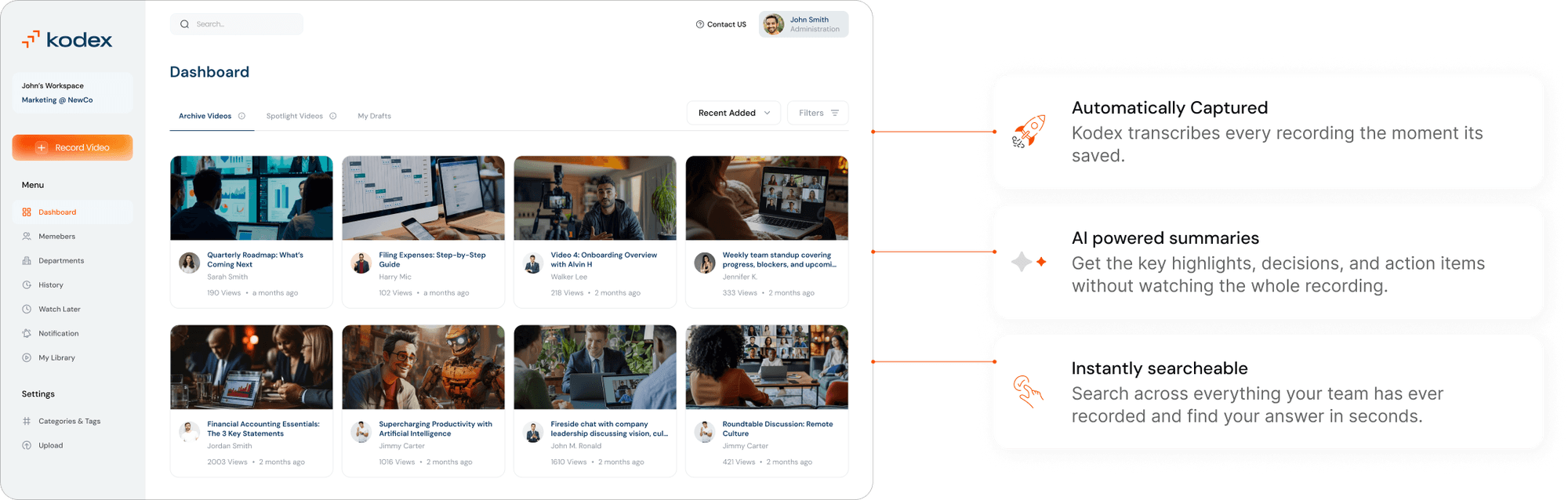
As organizations grow, so does the knowledge their teams create. Yet much of it stays confined to a few people, ends up deep in Slack threads, or lives in some shared Google Doc.
To address this, I led the end-to-end design and development of Kodex. Starting with qualitative user research, I worked closely with cross-functional teams to build an enterprise platform that gives institutional knowledge a permanent, searchable home.
- Client
- Zein Zoulfikar (Financial Sponsors Group, J.P. Morgan)
- Industry
- AI knowledge platform, SaaS product
- Timeline
- September 2024 – January 2026
- My role
- Lead Developer & Designer
Problem
Accessing team expertise felt slow and fragmented
Research showed that employees weren't struggling because information didn't exist — they struggled because it was scattered.
Finding it often meant messaging coworkers, searching multiple tools, or rewatching long recordings for a single detail. The larger the company grew, the more time people spent looking for knowledge instead of using it.
Research
Looking beyond the qualitative data
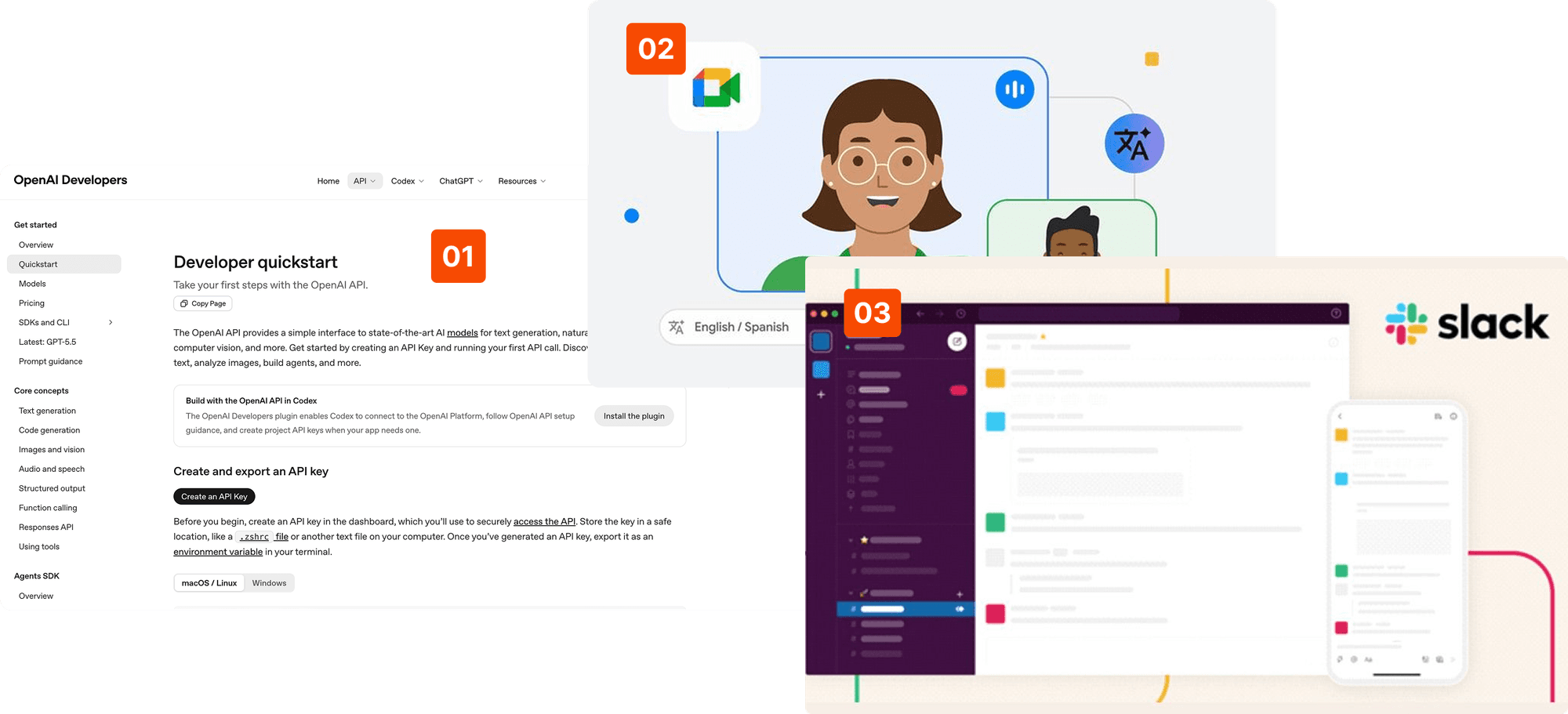
To understand how teams manage and share knowledge, I ran 10 in-depth interviews with people across product, engineering, design, and operations. Rather than asking about documentation alone, I focused on how they found information, shared context, and collaborated day to day.
Mapping the interviews made it clear the issue wasn't a lack of knowledge — it was a lack of accessibility. Four consistent patterns emerged, and they became the foundation for every major design decision that followed.
Knowledge is shared informally
Most of the time I just jump on a quick Zoom or Slack huddle and walk someone through it.
I've explained the same process multiple times, just to different people on different calls.
We share a lot through recordings, but there's no real system to organize or reuse them.
We use Loom a lot, but those videos just get buried in Slack threads after a while.
Work is often repeated
Every time someone new joins, we go through the same walkthroughs again from scratch.
We don't have a place to point people to, so we just keep explaining things over and over.
For onboarding, it's basically the same set of calls repeated for every new person.
I'll think 'didn't I already explain this last week?' but there's no way to reuse it.
Knowledge lives in people
On our Gen AI team, only one person really knows how the prompt pipelines are set up.
We have docs, but they're not up to date. We just go with whatever worked last time.
A lot of our tools were built fast, so the knowledge never got written down.
Even for simple things, I still double-check with someone instead of trusting the docs.
Documentation is unreliable
We made a bunch of docs when we started, but no one really goes back to update them.
Some tools are documented, but only at a high level — the real details are learned on the job.
New hires followed the docs exactly and still got stuck because steps were missing.
We have a Notion page for most things, but I don't trust it — half is outdated.
Synthesis of 10 user interviews, mapping the structural inefficiencies in daily knowledge consumption.
Kodex vs. options already in the market
These five capabilities were chosen because each maps to a real pain point from the research — not because they made Kodex look good in isolation.
| Competitor analysis | Slack | Loom | Notion | Kodex |
|---|---|---|---|---|
| Find answers instantly | ||||
| Auto captures & transcribes | ||||
| AI summaries & insights | ||||
| Organize by team & tags | ||||
| Action items & decisions |
User personas
Two personas synthesized from the interviews above.
Dana
Team lead, tired of repeating herself
- Age
- 34
- Role
- Engineering team lead
- Location
- Austin, TX
- Team size
- 12 people
Dana has led a team of 12 for four years. Most weeks, a real chunk of her time goes to re-explaining the same onboarding steps and decisions to whoever asks next.
Core needs
- A way to point people to an answer instead of re-explaining it live, every time.
- A single source of truth for how her team's past decisions were made.
Frustrations
- Repeat questions eat into her week.
- The docs that do exist go stale fast, so nobody trusts them.
- She's become "the answer" for things that should just be searchable.
“Sometimes I think, didn't I already explain this last week?”
Tools used daily
Malik
New hire, missing the tribal knowledge
- Age
- 24
- Role
- Junior ML engineer
- Location
- San Francisco, CA
- Tenure
- 2 months
Malik joined the Gen AI team two months ago. He's sharp and self-sufficient, but keeps hitting walls where only one senior teammate actually understands how something works.
Core needs
- A searchable record of decisions and processes, not just a person to ask.
- A way to ramp up without waiting on someone else's calendar.
Frustrations
- Undocumented systems where one person holds all the context.
- Feeling like he's bothering people with basic questions.
- No way to tell if an answer he found is still current.
“If something breaks, everyone just pings Dana.”
Tools used daily
Ideation
Designing a closed-loop knowledge ecosystem
The research made one thing clear: capturing knowledge and finding it couldn't be treated as separate problems. I began by sketching the whole experience — how information would move from a recorded meeting into something anyone could search and learn from.
These early concepts shaped the core structure of Kodex and guided later interface decisions around uploading, AI summaries, transcripts, and search.
(add export)
(add export)
(add export)
Design
From insights to interface
Capture knowledge instantly
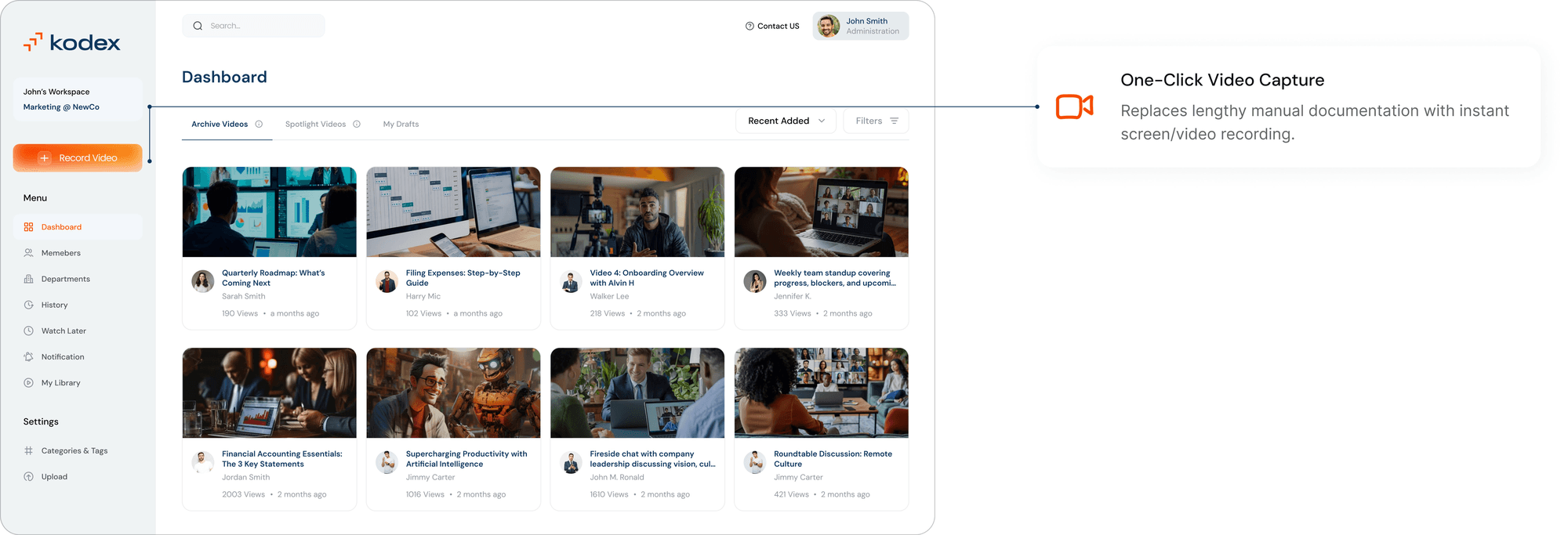
Most participants told us they'd rather record a quick video than write and maintain long documentation. So in Kodex, recording is the fastest way to share what you know.
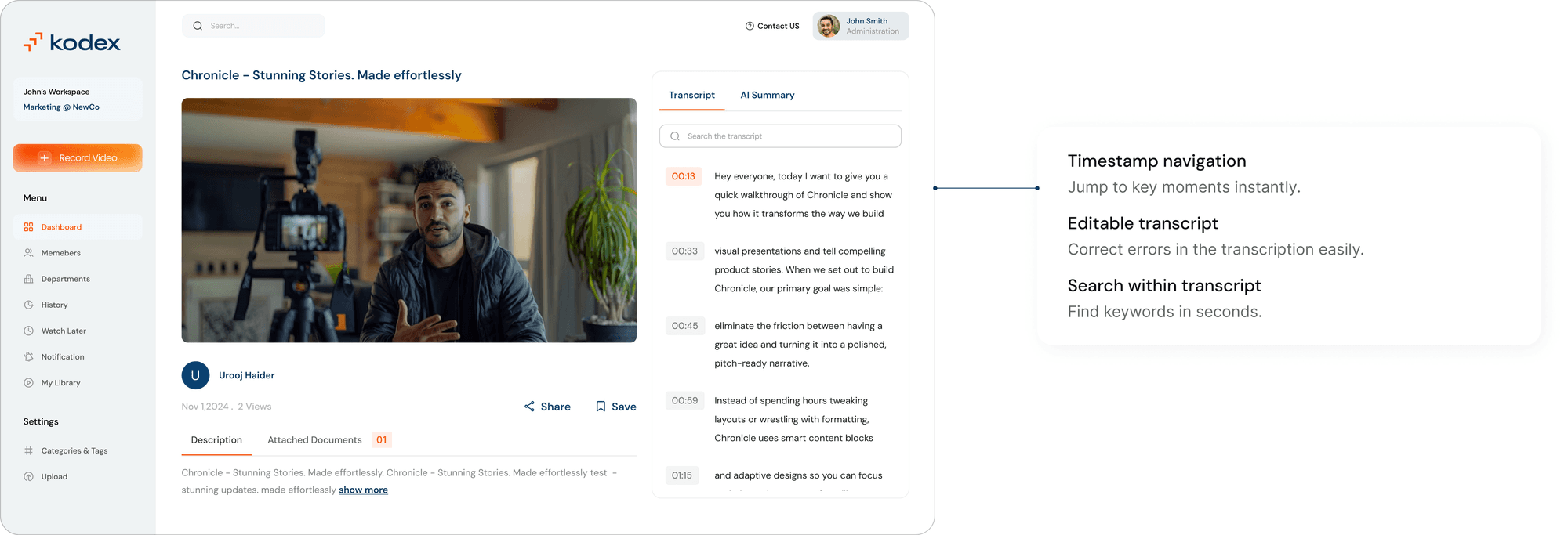
Turn conversations into searchable transcripts
Documentation goes stale and takes constant effort to maintain. Kodex removes that effort by automatically generating transcripts and summaries from every recording.
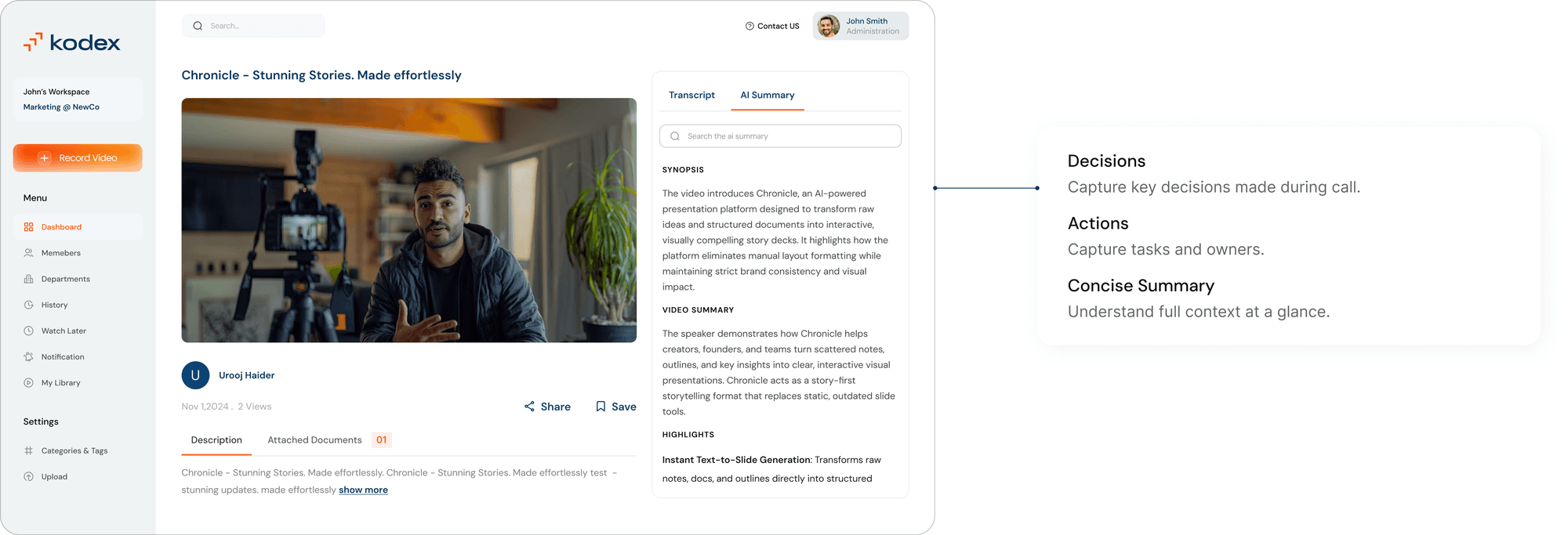
AI summaries that drive clarity and action
Summaries surface what matters — decisions, action items, and a concise recap — so teams grasp the key points without watching the whole recording.
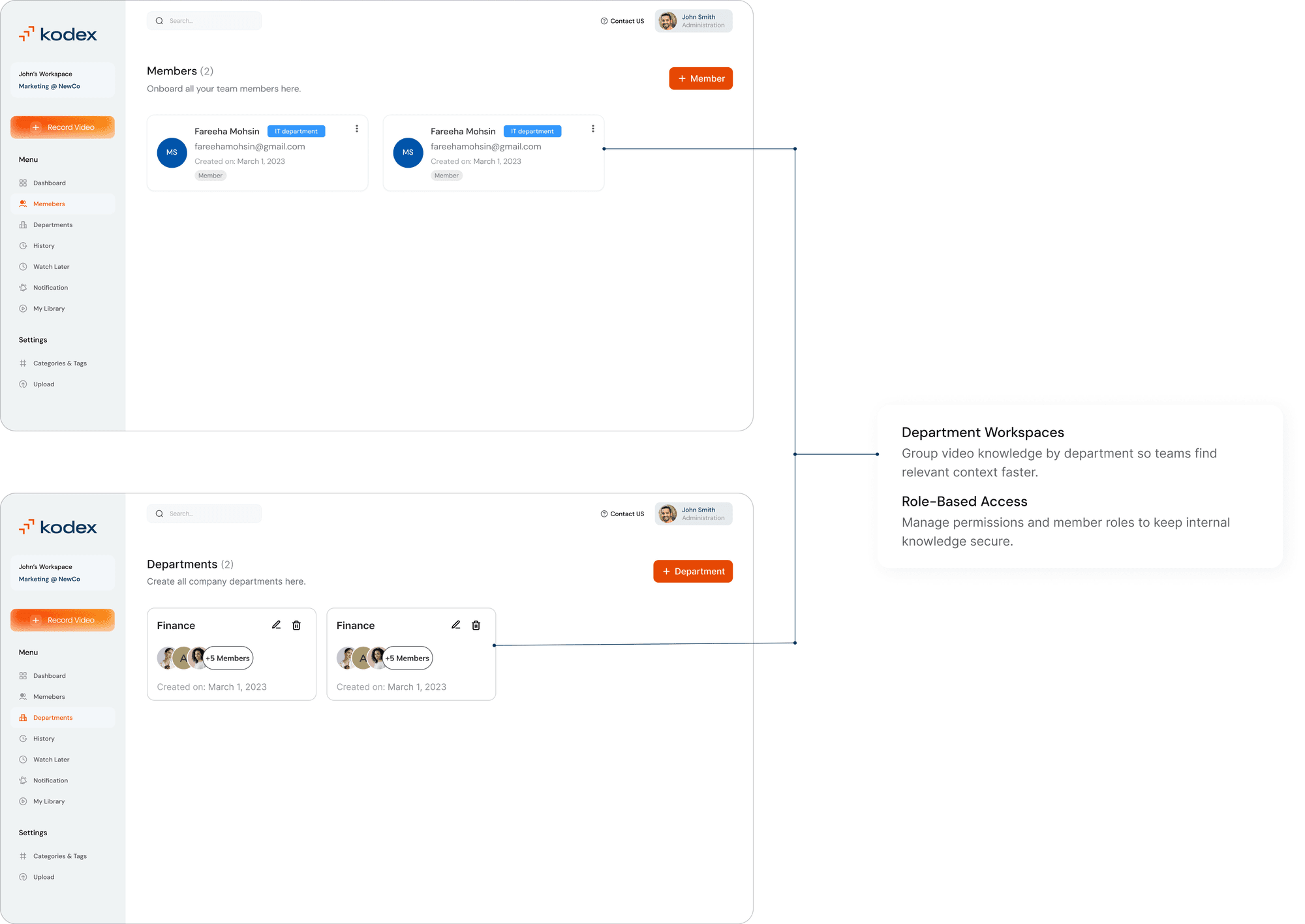
Organizing knowledge across teams
Knowledge is grouped by team and department, so people find relevant context fast while ownership and access stay clear.
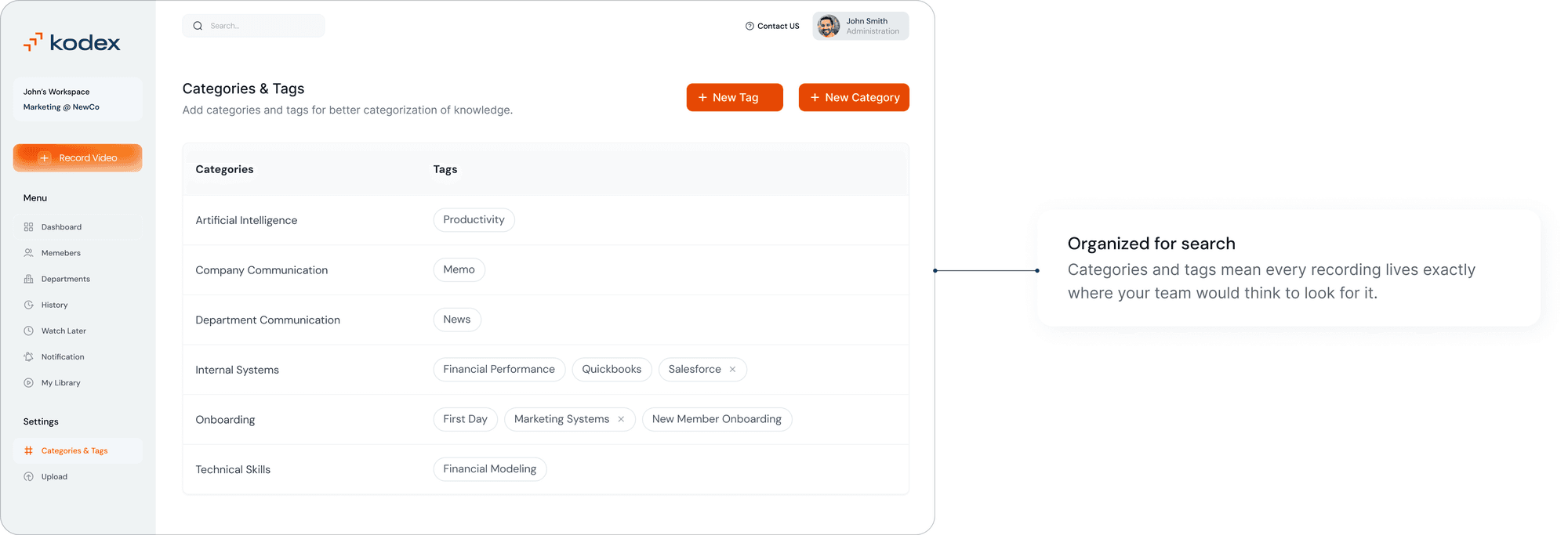
Structure knowledge with categories and tags
Instead of recordings getting buried across tools, custom categories and tags keep everything organized so teams can find it instantly.
Have an idea worth building?
Book a call with the Venfound team and let's talk it through.